Schönbrunn Mozart Concert Guide
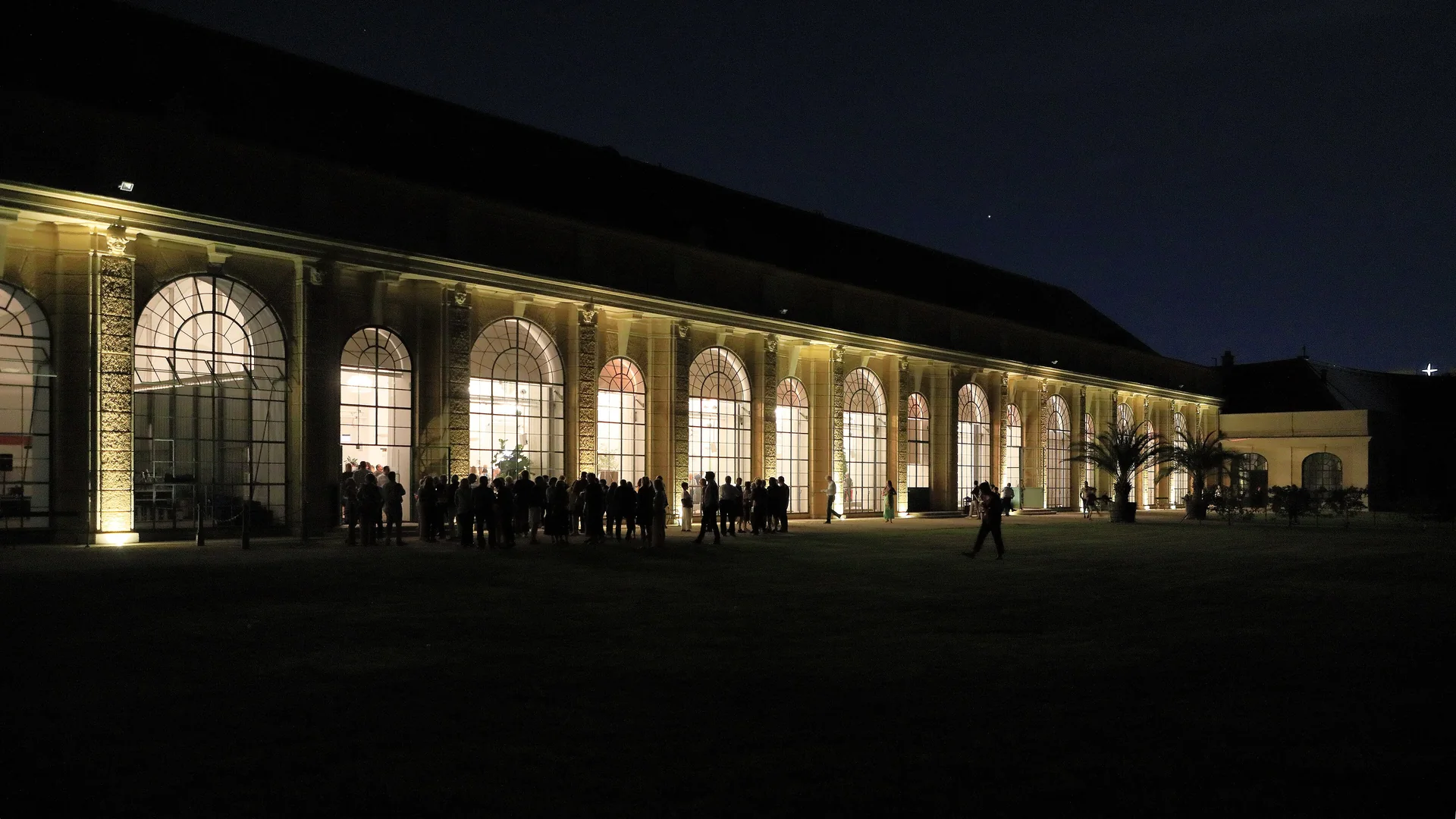
The long arched front of the Schönbrunn Orangery lit up at night, with concertgoers gathered on the lawn outside

Schönbrunn Orangery · Vienna

Hear Mozart where he played as a boy

4.5 (3,595 verified reviews · GetYourGuide)

In the Schönbrunn Orangery, a soprano, a baritone and the palace orchestra play Mozart and Strauss for about 105 minutes.

At the interval, the Orangery garden opens in the warmer months.

The short answer first

Is the Schönbrunn Palace concert worth it, and which ticket category should you choose?

Yes, if you want light classics in a real Habsburg building

The palace orchestra, a soprano and a baritone play popular Mozart and Strauss for about 105 minutes, with an interval at the bar or, in the warmer months, in the Orangery garden. The music is the well-loved end of the repertoire, and the room is a baroque hall built to shelter the court's citrus trees. It is a concert in the Orangery beside the palace, not a visit to the palace rooms.

What the VIP category adds

VIP holders get priority entry at the hall door and at the bar, seats in the front rows, a free cloakroom, a programme booklet and a glass of sparkling wine. It suits a first visit, an anniversary, or anyone who wants to watch the singers' faces. Every other category gives free choice of seat inside its own block, and seats go first come, first served on the night.

Free cancellation runs out three days ahead

Many Vienna concert tickets let you cancel until the day before. This one does not: a full refund needs at least three days' notice. If your plans are loose, hold off until they firm up, or book a date you are sure of.

Some nights move into the palace

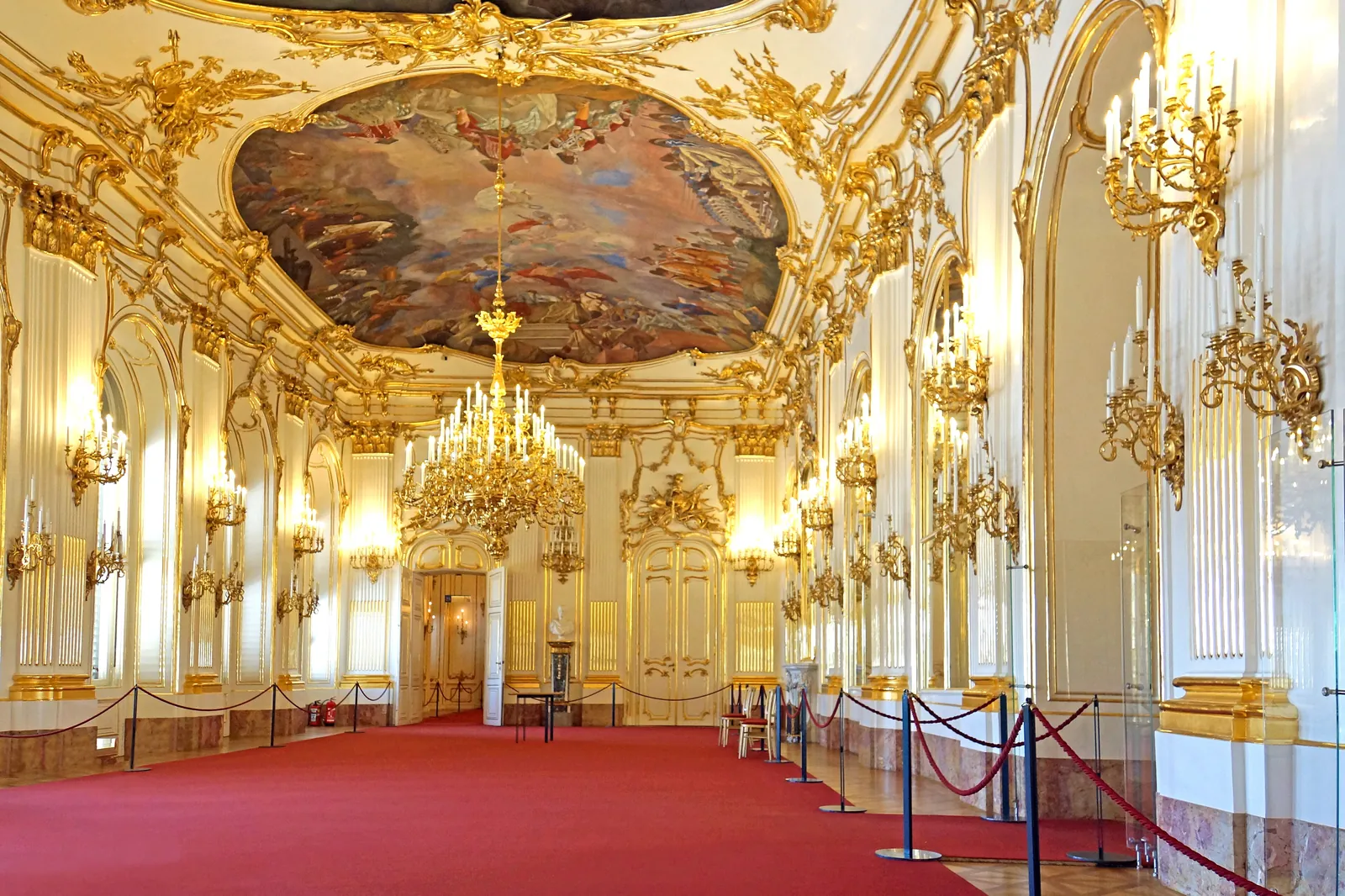
On selected dates the concert is held in the Great Gallery or the White-and-Gold Room of the palace's main building instead of the Orangery. Start times also change from date to date, so the time and the hall on your confirmation are the ones to follow, not a time you saw elsewhere.

The Orangery in four numbers

189 m
The Orangery is 189 metres long and 10 metres wide.
1786
Mozart's Der Schauspieldirektor and Salieri's rival opera were staged at opposite ends of the Orangery.
1762
The six-year-old Mozart gave a concert for Maria Theresa at Schönbrunn.
105 min
The length of the concert, interval included.

Part one, the interval, part two

The kinds of piece a Mozart-and-Strauss night draws on

The organiser describes the evening in two halves: Mozart before the interval, the Strauss family after it. These are the forms that fill each half, with the background drawn from Wikipedia. Read it as a field guide to the evening rather than a running order.

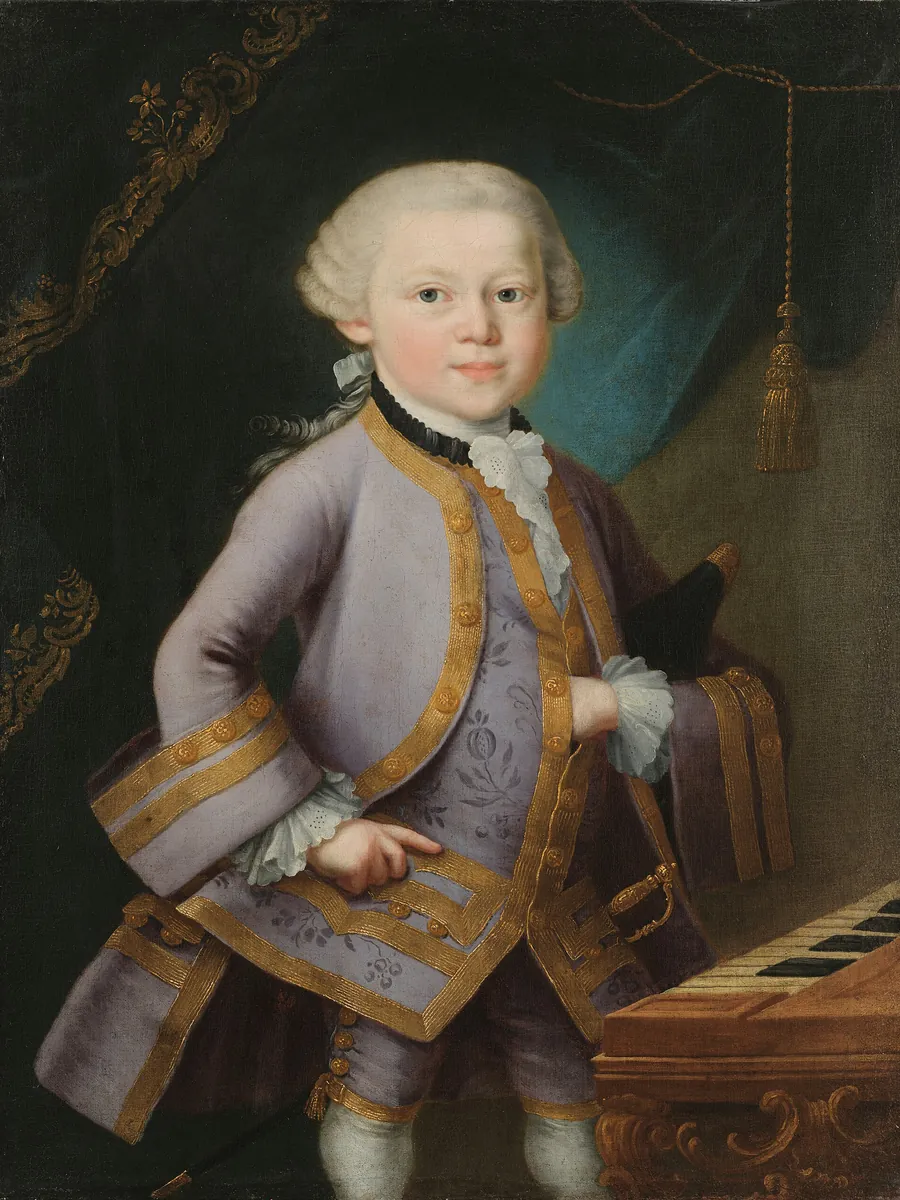
Portrait of a small boy in a lilac court suit trimmed with gold braid, one hand resting by a keyboard
Mozart as a boy in court dress, in a portrait attributed to Pietro Antonio Lorenzoni

Part one · Mozart

  1. Mozart · overture

    The curtain-raiser

    An overture is the orchestral opening of an opera, played before any singer appears. Wikipedia notes that Mozart wrote his Orangery entry of 1786 in the same busy period as The Marriage of Figaro, which had its premiere later that year.

  2. Mozart · serenade

    A little night music

    Eine kleine Nachtmusik is the nickname of Mozart's Serenade No. 13, finished in Vienna in August 1787. Wikipedia explains that the title simply copies his own catalogue entry for a small serenade, and that nobody knows why he wrote it.

  3. Soprano and baritone

    A duet of seduction

    Opera duets for these two voices are a natural fit for the evening's pair of singers. The best known is Là ci darem la mano from Don Giovanni, where the baritone Don tries to talk the soprano Zerlina into following him to his castle.

  4. Mozart · Singspiel

    Songs from The Magic Flute

    Mozart's last opera mixes singing with spoken dialogue, a form called Singspiel. Wikipedia describes the bird-catcher Papageno, the Queen of the Night and her famously high coloratura, and a cheerful Papageno duet that echoes a number by Salieri.

The interval

The bar, or in the warmer months the Orangery garden

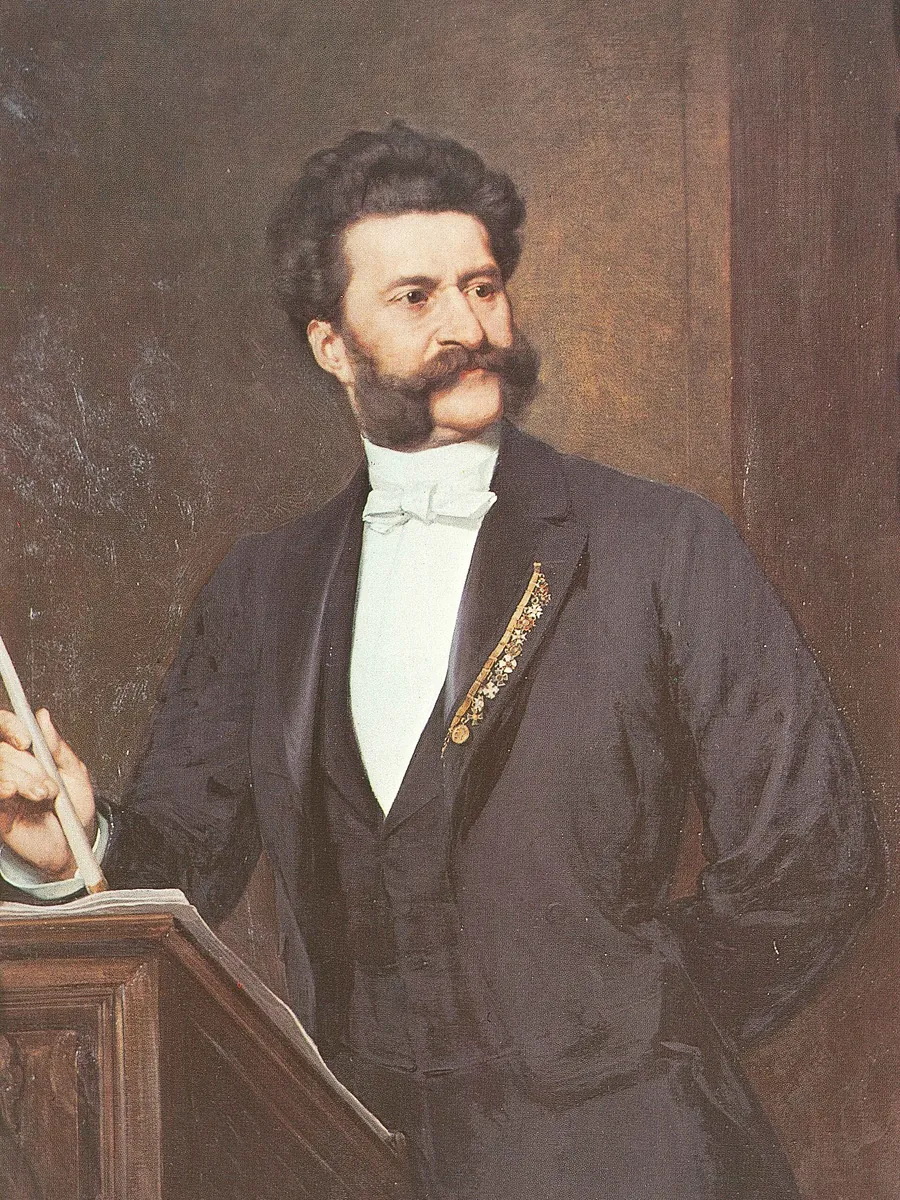
Portrait of a man with dark curly hair and a large moustache in a black frock coat, standing at a music desk
Johann Strauss II, painted by August Eisenmenger

Part two · Strauss

  1. Strauss · waltz

    The Blue Danube and its kin

    Johann Strauss II wrote The Blue Danube in 1866. Wikipedia records a lukewarm first outing with a men's choir in 1867, then a triumph in its orchestral form at the Paris World's Fair that same year. The Viennese waltz turns at roughly twice the speed of the slow ballroom waltz.

  2. Strauss · polka

    Two beats instead of three

    The polka is a quick dance in two-four time that began in 19th-century Bohemia. Polkas sit beside waltzes among the more than 500 dances Strauss II composed, and Wikipedia lists the Tritsch-Tratsch-Polka among his best-known works.

  3. Strauss · operetta

    A party with a twist

    Die Fledermaus, Strauss's best-known operetta, had its premiere in 1874. Its makers swapped the French play's New Year's Eve supper for a Viennese ball, which is why its music sits so naturally beside his waltzes.

  4. Strauss the elder · march

    The clapping finale

    Johann Strauss I, father of the Waltz King, wrote the Radetzky March in 1848. Wikipedia links it today with the New Year's Concert of the Vienna Philharmonic, as its customary encore.

The programme is chosen by the organiser and can change from night to night. Nothing on this page promises a particular piece.

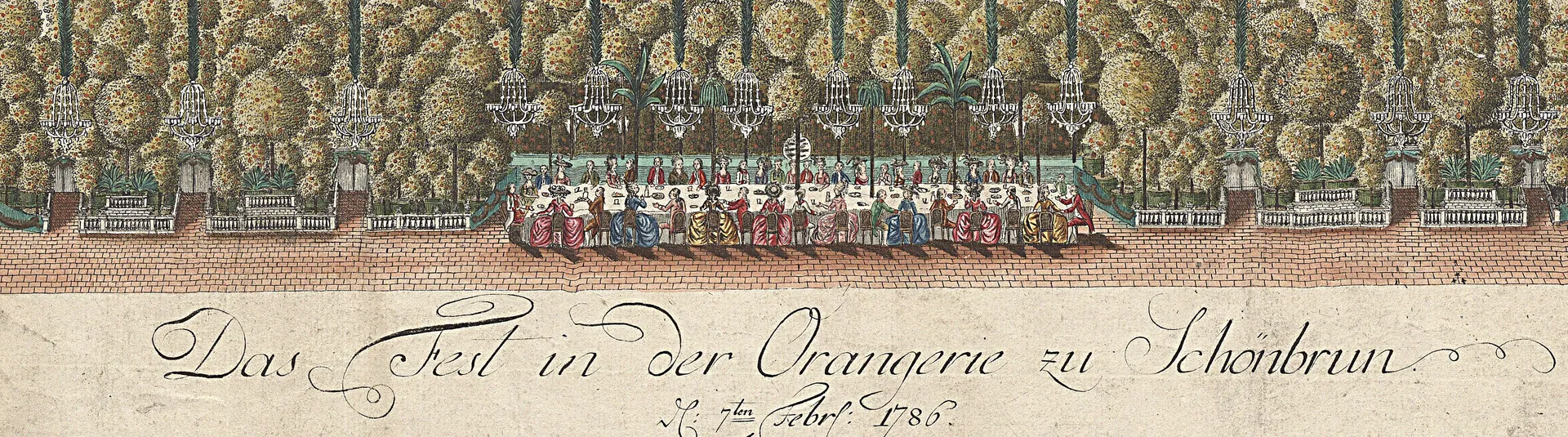
An engraving of a long banquet table laid between rows of tubbed orange trees inside the Orangery, with a copperplate title below
Hieronymus Löschenkohl's engraving of a court festival in the Orangery, the banquet table laid between rows of orange trees

Where the music happens

A hall built for orange trees

The concerts take place in a working garden building with a long court history. Schönbrunn's own history pages and the organiser's venue notes fill in the story.

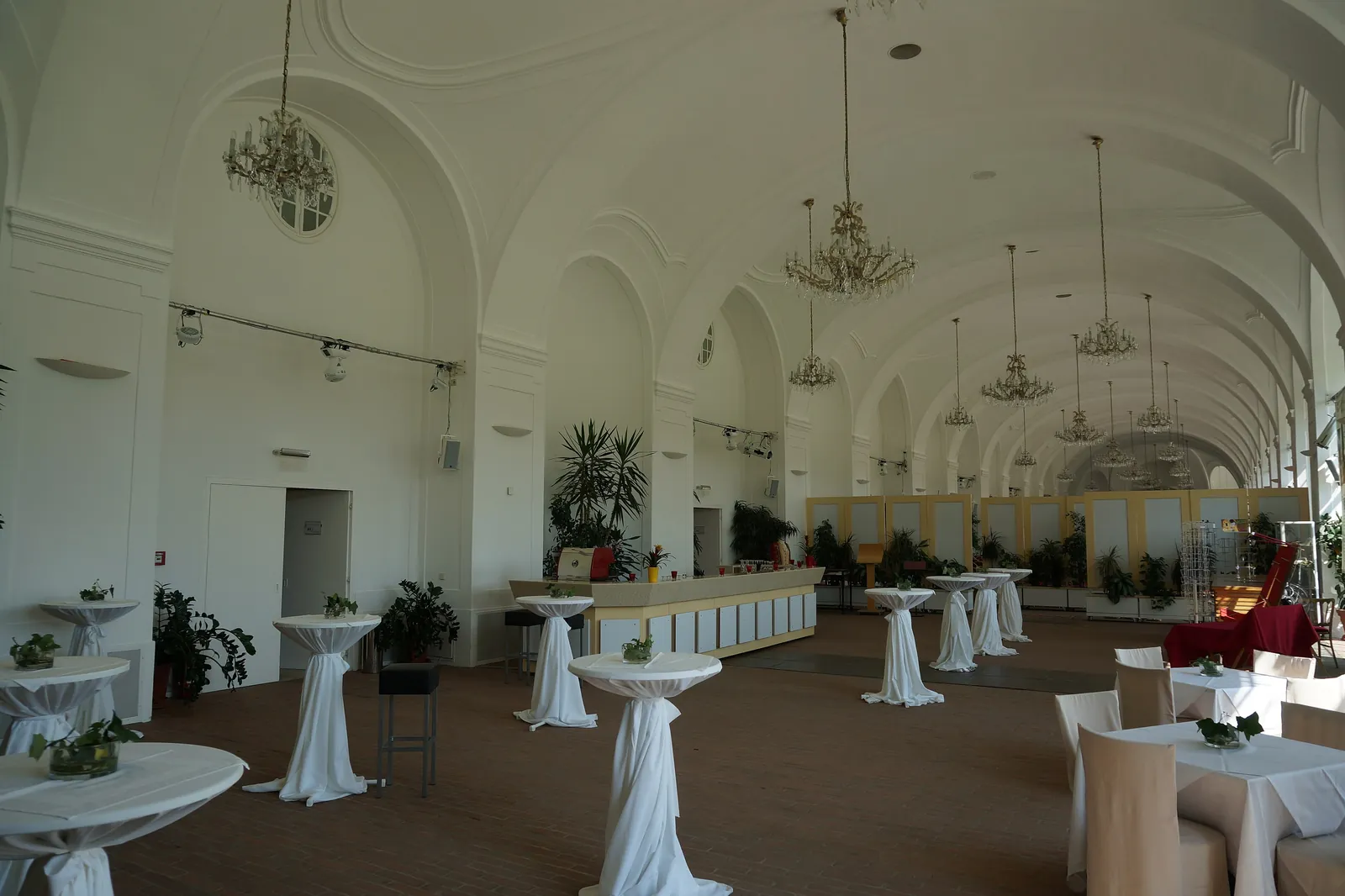
A long white vaulted hall with chandeliers, standing tables in white covers and potted plants
The event hall inside the Orangery, set up for a reception
  1. Built for citrus

    An orangery garden with a hothouse for tender citrus trees existed here under the dowager empress Wilhelmine Amalie. In 1754 Franz I Stephan had the present Orangery built by Nikolaus Pacassi, probably to designs by Nicolas Jadot.

  2. One of the two largest

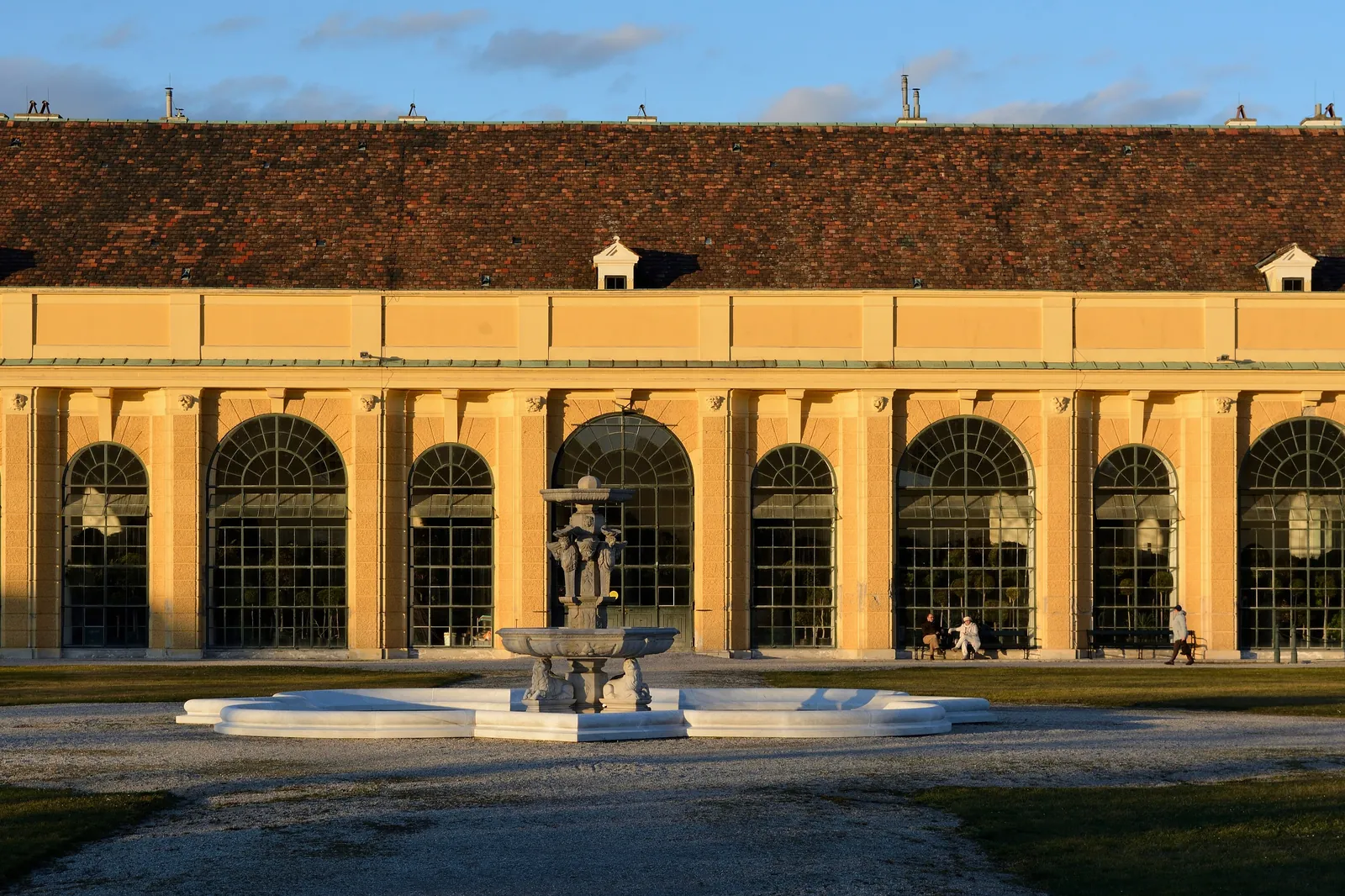
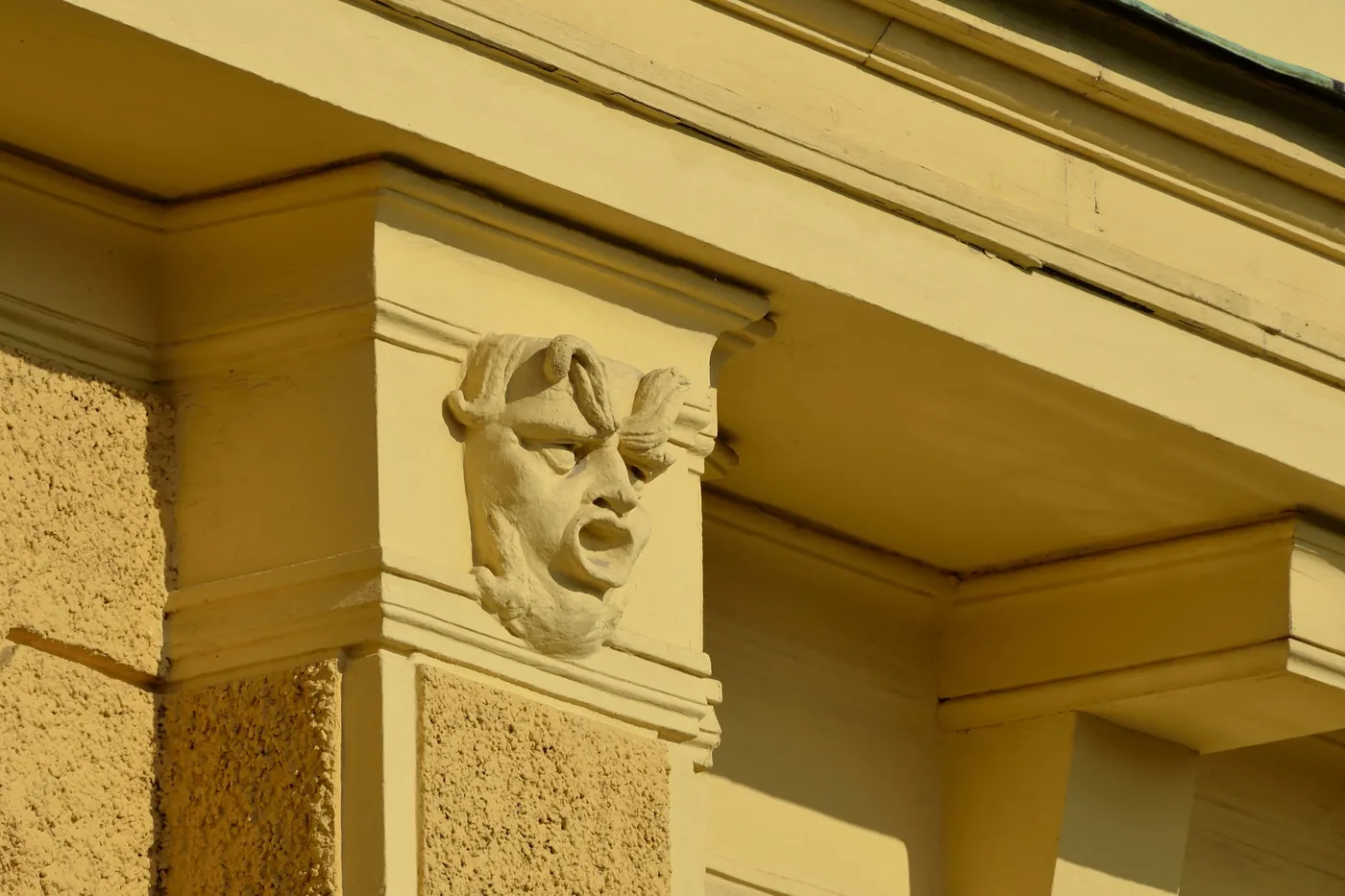
    At 189 metres long and 10 metres wide, it is one of the two largest baroque orangeries in the world, the other being at Versailles. Large and small round-arched bays alternate along its south front, separated by pilasters carved with masks.

  3. Warm from below

    A hypocaust system heats the floor, which is how citrus trees and other tub plants survive the Vienna winter inside. The concerts run indoors all year for the same reason.

  4. Banquets among the trees

    Joseph II liked to hold banquets in the plant-filled hall after seeing the winter garden of the imperial palace in St Petersburg. One was billed as a spring festival on a winter's day, held on 6 February 1785.

  5. The 1786 contest

    On 7 February 1786 the emperor staged two short operas at once: Salieri's Prima la musica e poi le parole at one end of the Orangery and Mozart's Der Schauspieldirektor at the other.

  6. Split by a glass wall

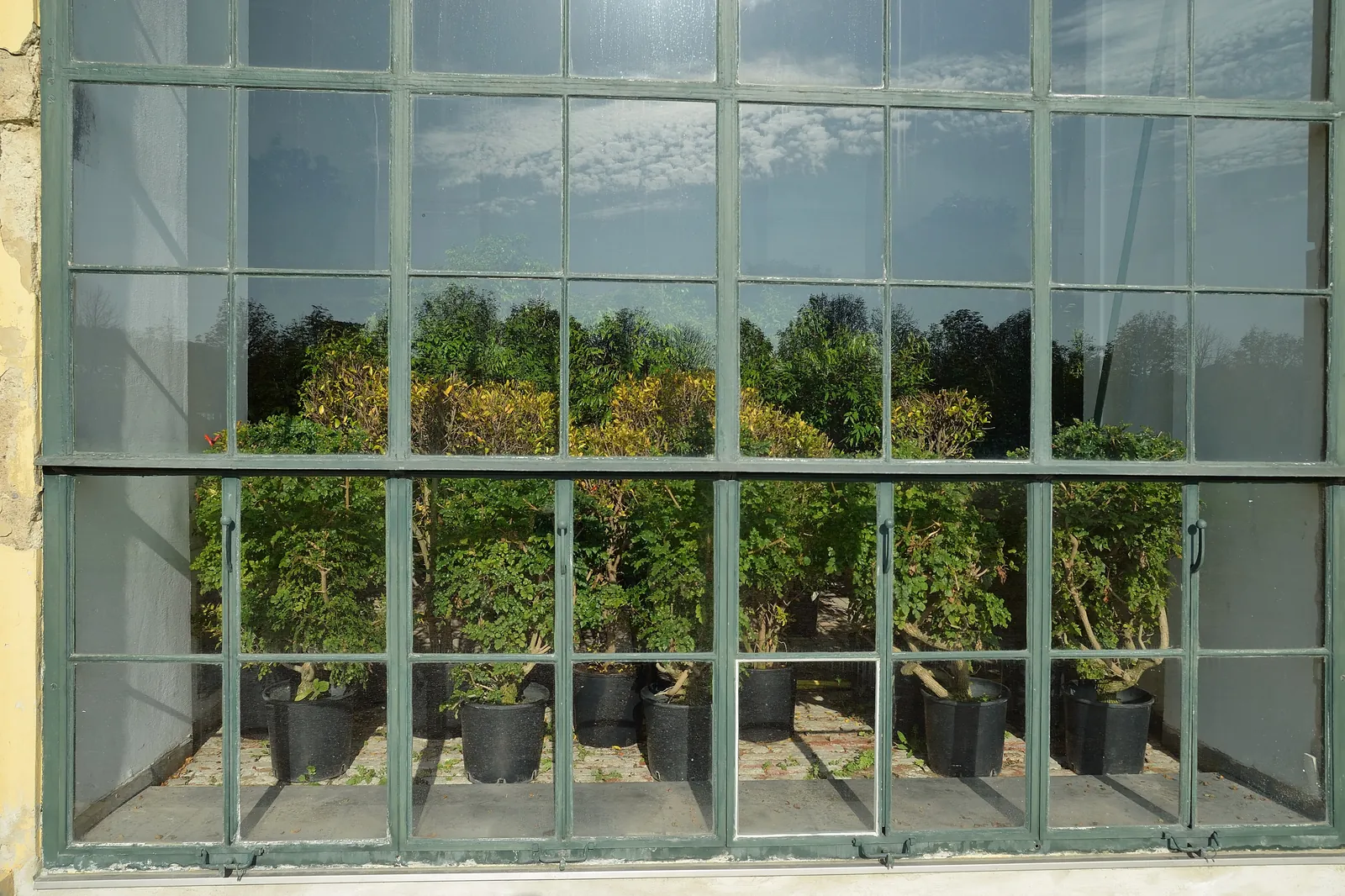
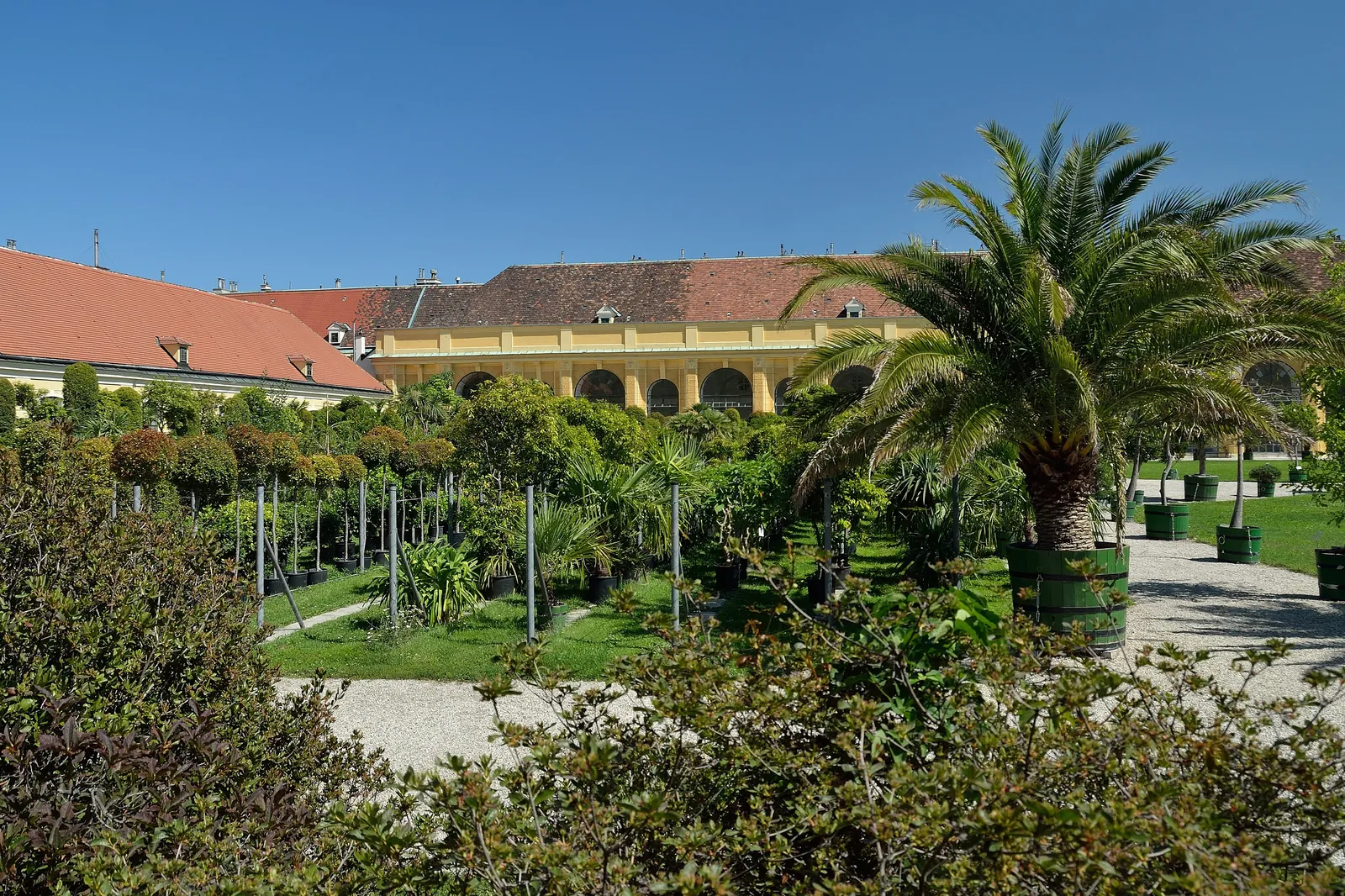
    Today a glass wall divides the building. The longer part, on the palace side, is a greenhouse again, while the end towards the Meidling gate serves as the concert and event hall.

The night, step by step at Schönbrunn

From your confirmation to the taxi rank

Seven steps from checking your ticket to heading home. Times and the hall depend on your date, so your confirmation has the final word.

  1. Check

    Read your confirmation

    Start times vary by date, and on selected dates the concert moves into the palace itself. The confirmation names the hall and the time for your night.

  2. Arrive

    Find the Orangery door

    Take the U4 to Schönbrunn. The concert entrance is at Schönbrunner Schlossstraße 47, which Schönbrunn's own site places about 300 metres to the left of the palace's main entrance.

  3. Doors

    Claim a seat in your block

    The hall opens half an hour before the concert. Seating is free within each category, first come, first served, so arriving early gets you the best of your block.

  4. Coats

    Check your coat

    Vienna's event rules require coats, jackets, bulky backpacks and umbrellas to go into the cloakroom. It costs a small fee unless you hold a VIP ticket.

  5. Part one

    Mozart

    Overtures, arias and duets from the operas, with the soprano and the baritone taking turns in front of the orchestra.

  6. Interval

    The bar or the garden

    Drinks are served at the bar and must stay in the bar area. In the warmer months the Orangery garden is open for the break.

  7. Part two

    Strauss, then home

    Waltzes, polkas and operetta make up the second half. Afterwards taxis wait in front of the Orangery, and the U4 runs back towards the centre.

The Orangery ticket, line by line

Inside the ticket, and outside it

Seven short lines on what the ticket covers and where its edges are.

Check dates and categories on the same booking page ↗

The ticket
A seat in your chosen category at a concert of Mozart and Strauss by the palace orchestra with a soprano and a baritone, sold by Palace Concerts Schoenbrunn.
Not a palace visit
The concert is in the Orangery beside the palace. The state rooms are a separate ticket with separate hours.
Seats
Free choice of seat within your category; the first to arrive choose first.
VIP extras
Priority entry to the hall and the bar, front rows, a free cloakroom, a programme booklet and a glass of sparkling wine.
Not included
Transport, parking, food and drinks. Outside the VIP category the cloakroom costs a small fee.
Venue changes
On selected dates the concert moves into the Great Gallery or the White-and-Gold Room in the palace's main building.
Cancellation
Full refund if you cancel at least three days ahead.

Choosing a category

VIP, A, B and C: what changes from the front of the hall to the back

CategoryWhat you getWho it suits
VIPThe front rows, priority entry to the hall and the bar, a free cloakroom, a programme booklet and a glass of sparkling wineA first visit, a celebration, or anyone who wants to see the singers up close
AThe seats behind the VIP rows, with free choice inside the blockGood sightlines without paying for the extras
BSeats in the middle of the hallA clear view at a lower price
CThe rear block, which on busy nights can sit some way from the stageListeners who care more about the music than the view

Book the evening, or build a day around it

The concert, the long evening and two daytime picks

The concert on its own comes first. Next is the long version: the palace after closing, a dinner nearby and then the same concert. Two daytime options follow, the zoo in the palace grounds and an hour of Vienna's history in the first district.

The Orangery concert

4.5 · 3,595 reviews · From US$65

About 105 minutes of Mozart and Strauss from the palace orchestra, a soprano and a baritone, with an interval at the bar or in the garden.

Check this date ↗

Palace after closing, dinner, then the concert

4.4 · 994 reviews · From US$164

Around five hours: a self-guided visit of the palace after hours with an audio guide, a three-course Austrian dinner at a restaurant near the palace, then the concert.

Check this date ↗

Schönbrunn Zoo, without the ticket queue

4.8 · 5,155 reviews · From US$32

A daytime ticket for the zoo inside the palace grounds, founded in 1752 and home to giant pandas. Pair it with the concert on the same day.

Check this date ↗

An hour of Vienna's past in 5D

4.6 · 4,577 reviews · From US$28

A multimedia trip through about 2,000 years of the city's history with a 5D cinema and a virtual-reality ride. It has steps and no lift.

Check this date ↗

Pick a night at the Orangery

Choose a day to see which categories are still open and when that night's concert begins, priced in your currency.

Other Vienna evenings and days, live from GetYourGuide

Everything else to book in Vienna ↗

Getting there and back

Doors, dress, cloakroom and the ride home

By U-Bahn

The U4 stops at Schönbrunn station, a short walk from the Orangery. Schönbrunn's own site also lists trams and a bus that stop at Schloss Schönbrunn.

Finding the door

The concerts are not in the main palace building but in the Orangery, which shares the palace street address, Schönbrunner Schlossstraße 47. Look for the long arched building beside the palace rather than the main gate.

By car

Paid parking sits right opposite the Orangery, run as a separate car park with its own charges.

What to wear

The organiser asks for smart casual. A jacket or a dress is common, but nobody expects evening wear.

Children

The organiser sets no minimum age. Strollers cannot go into the hall and are left at the cloakroom instead.

Access

The Orangery can be entered without steps. If you need a wheelchair space, tell the organiser before your date.

Photos

Sound, photo and video recording are not allowed during the concert. Pictures before and after it are fine.

Going home

A taxi rank sits in front of the Orangery, and plenty of cabs wait when the concert ends. The U4 runs back towards Karlsplatz and the centre.

Winter months

The organiser credits the palace orchestra from April to October and over Christmas and New Year, and a palace ensemble in the other winter weeks.

FAQ

Before you book the Orangery concert

Is the Schönbrunn Palace concert worth it?

Yes, for most visitors who want a relaxed evening of Mozart and Strauss in a historic building. The palace orchestra, a soprano and a baritone play popular pieces for about 105 minutes, interval included. Choose a concert hall instead if you want a full symphony or opera.

Which ticket category should I choose?

VIP for the front rows, priority entry, a free cloakroom, a programme and a glass of sparkling wine. A or B for a good view without extras. C if hearing the music matters more than seeing the stage. Within each category, seats go to whoever arrives first.

Is the concert held inside Schönbrunn Palace?

Usually it takes place in the Orangery beside the palace, not in the state rooms. On selected dates it moves into the Great Gallery or the White-and-Gold Room in the palace's main building. Your confirmation names the hall.

What time does the concert start?

It changes from one date to another. Pick a night on the calendar to see its start, then rely on the time printed on your confirmation rather than one you read elsewhere.

Can I cancel for free?

Yes, but only up to three days before the concert, which is longer notice than many Vienna concerts ask for. After that a full refund no longer applies.

How long is it, and is there an interval?

About 105 minutes including one interval. You can spend the break at the bar or, in the warmer months, in the Orangery garden.

What should I wear?

Smart casual is the organiser's dress code. Nobody expects evening wear, but most guests dress up a little.

Do I have to use the cloakroom?

Yes. Coats, jackets, bulky backpacks and umbrellas must be checked under Vienna's venue rules. There is a small fee per item unless you hold a VIP ticket.

Can I bring children, and is it accessible?

The organiser sets no minimum age, but strollers stay at the cloakroom. The halls are step-free; tell the organiser in advance if you need a wheelchair space.

Is it a full orchestra all year?

The organiser credits the palace orchestra from April to October and over Christmas and New Year, and a palace ensemble in the other winter weeks. A soprano and a baritone sing in both.

Is this the concert organiser's or the palace's website?

No. You are reading an independent guide, written separately from the concert organiser, the orchestra and Schönbrunn Palace and with no tie to any of them. Your booking goes through GetYourGuide, which takes the payment and sends the ticket.
Mozart before the interval, Strauss after it, in a baroque hall built for orange trees.

Choose your concert night ↗

Choose a date and a category and the full total appears in the currency you select, booking fee included.

See dates and seat categoriesFree to cancel until 3 days ahead